

Is It Hard to Drive in Orlando, Florida? (By Someone From the UK)

Some of the links in this post are affiliate links. If you book or buy through them I may earn a small commission, at no extra cost to you. Read our full disclosure.
I drove in the United States for the first time when I was 30, and I’ve been back to Orlando behind the wheel several times since, most recently in February 2026.
Until that first trip, I’d avoided hiring a car while in the US thanks to public transport, Lyft and Uber. However, since my son was born in 2021, getting around using Uber and Lyft has become more complex because the little one needs a car seat.
That being said, I have no idea why I waited this long because driving in Orlando, Florida, is incredibly easy. In fact, it’s possibly the easiest city to drive around in the USA. This is all coming from someone from the UK who is used to:
- Driving on the left
- Not turning right at a red light
- Roundabouts
- Driving ‘a stick’ (manual)
In the past, I’ve suffered from extreme anxiety. So, it’s no surprise that the thought of driving in Orlando kept me up at night. Which is crazy now that I think about it.
However, I’d now go as far as to say that driving in Orlando is a pleasure. So, I wanted to share my experience and some hints and tips to help you feel more comfortable when driving in Orlando.
UK vs Florida Driving: The Key Differences
Here are the main differences between driving in the UK and driving in Orlando.
| What | UK | Florida |
|---|---|---|
| Side of road | Left | Right |
| Steering wheel | Right | Left |
| Gearbox | Mostly manual | Mostly automatic |
| Right turn on red | Not allowed | Allowed after a full stop |
| Four-way stops | Rare | Common |
| Stopped school buses | Pass with care | Full stop from both directions |
| Drink-drive BAC limit | 0.08% (E&W) / 0.05% (Scotland) | 0.08% |
| International driving permit | N/A at home | Not required |
Drive an Automatic ‘At Home’ First
Most cars in the US are automatic. However, most cars in the UK are still manual. Driving an automatic is significantly easier than driving a manual, but if you’re not used to one, it’s another ‘new thing’ to think about.
To overcome this I recommend borrowing a friend’s automatic car or renting one for the day before you travel out to Florida. That way you’re getting used to driving an automatic car on familiar roads, not on ‘the wrong side of the road’ in a foreign country.
A few things to know before driving an automatic:
- P is Park
- R is Reverse
- N is Neutral
- D is Drive
I have driven an automatic car in the UK for the past five years now and I don’t think I’ve ever used Neutral. Instead I just hold the brake pedal for traffic lights and I only use Park when I’m actually parking. I’ll shift from D or R to Park and pull the handbrake.
When driving you’ll be using your right foot for both the accelerator and the brake. Your left foot should stay tucked out of the way, because there’s no clutch pedal to look for.

Best Place to Rent a Car in Orlando
I use Discover Cars to compare rental deals across 500+ partners before every trip.
Plan for a Long Wait at the MCO Car Rental Desk
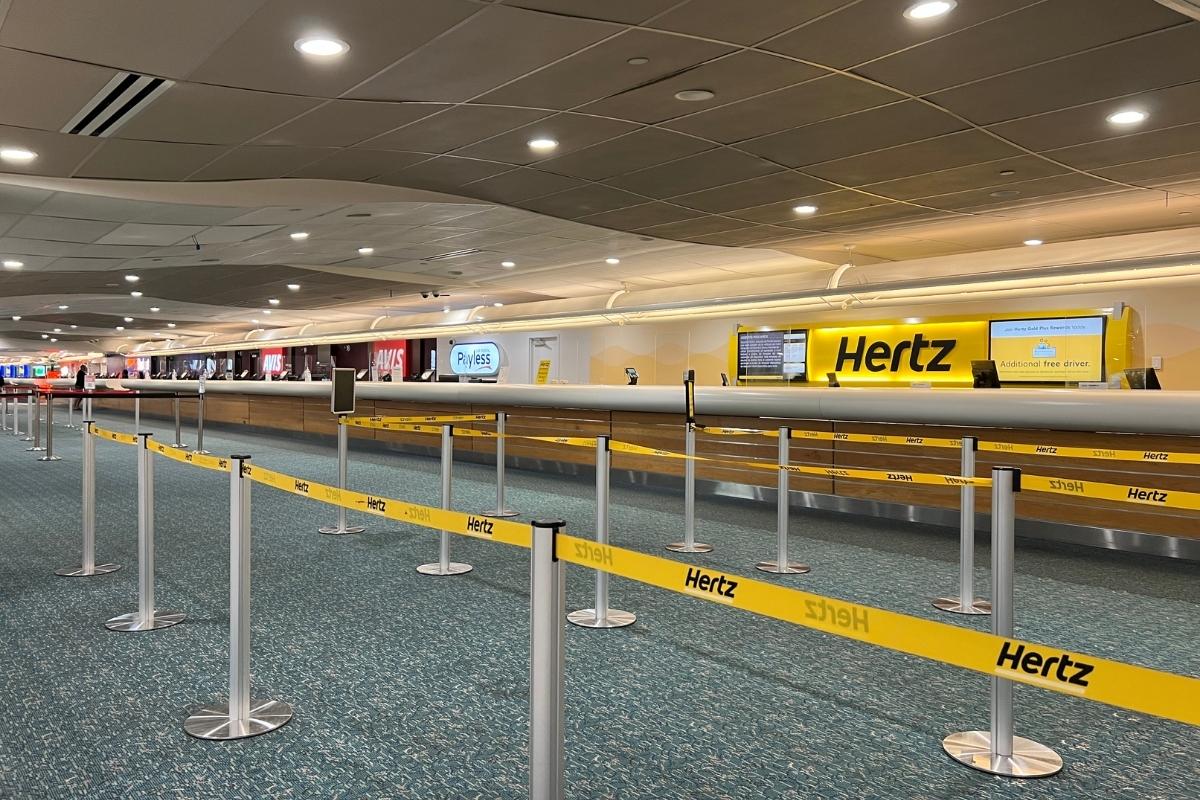
Orlando International (MCO) is the cheapest place to pick up a rental car in the area, but the trade-off is the queues. On two separate trips I’ve waited the best part of an hour at the rental desk before I even got the keys.
That said, I still pick up from MCO every time. The price difference compared to collecting from another nearby location is typically enough to justify the wait.
Your UK Licence Is All You Need
Your UK photocard driving licence is all you need to hire a car and drive in Florida. You don’t need an International Driving Permit. Florida scrapped that requirement years ago, and every major rental company accepts a UK licence on its own.
I’ve hired cars in Orlando several times with nothing more than my standard UK driving licence (the pink card). Just make sure it’s in date.
A few things worth knowing:
- You need to be 21 or over to hire a car. Most rental companies add a ‘young driver fee’ (usually $20 to $30 a day) for drivers under 25.
- You have to carry your physical licence with you any time you’re driving. A photo on your phone doesn’t count. If the police pull you over and you don’t have it, you can be fined.
- The paper counterpart hasn’t been needed since 2015. If you still have one, leave it at home.
Driving on the Right Isn’t That Bad
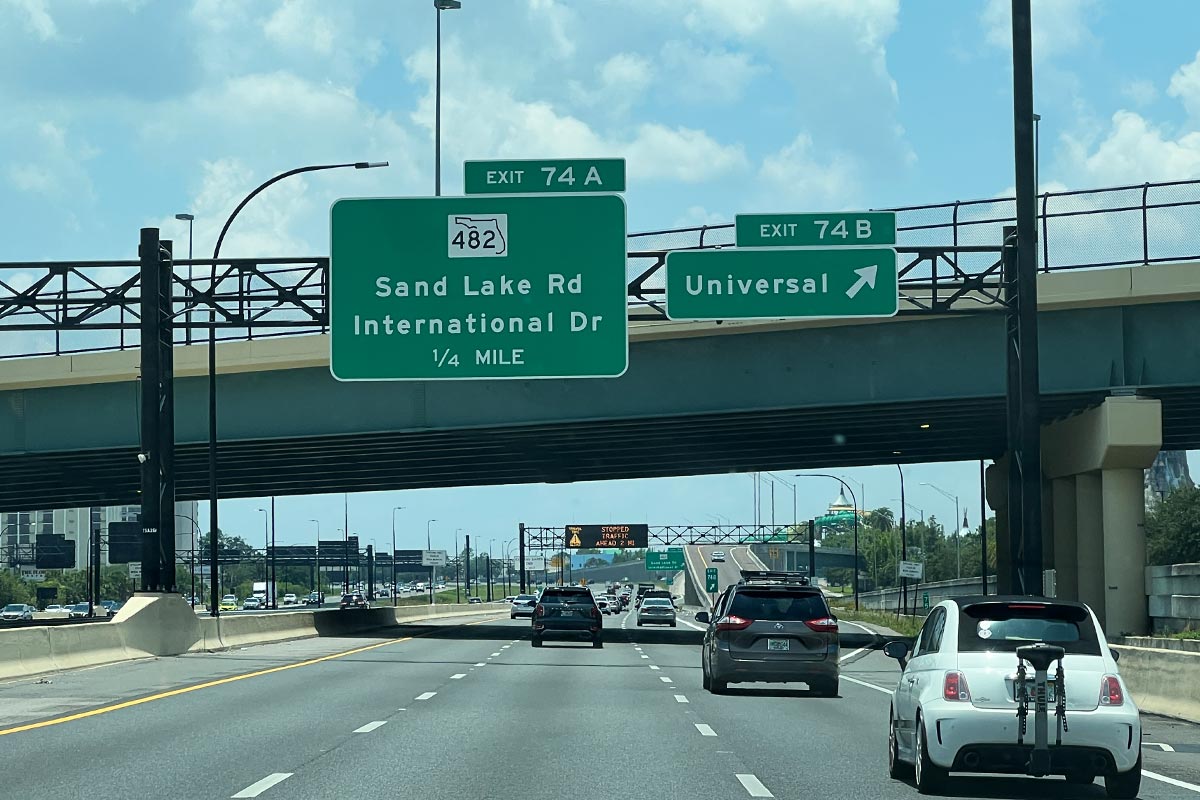
Being from the UK, I thought the thing I’d find the hardest would be driving on the right-hand side of the road. However, in reality it’s hard to get this wrong.
I mean sure, I made up a song to remind myself: “I’m in the USA so I’m driving on the right, driving on the right, driving on the right…” but I barely needed to use it. Instead, the flow of traffic and the road signs made it easy.
The only times I really had to think were when I was pulling out of empty car parks, driving down quiet side streets or at night / early morning when there was less traffic.
Florida’s Road Rules You Need to Know
Rental companies don’t tell you the rules and regulations of driving. Instead, it’s your responsibility to know these yourself in advance.
Yes, You Can Turn Right at a Red Light
Turning right at a red light feels wild. I’ve been driving for two decades and red has always meant stop. But in Florida, you can turn right on a red light unless a sign specifically tells you otherwise.
Drivers behind you at a right-turn junction will expect you to pull out when there’s a break in the traffic. US traffic lights stay red for a lot longer than UK ones, so you won’t want to just sit there waiting for green.
To turn right at a red light:
- Come to a complete stop at the line
- Double check for a “No Turn on Red” sign
- If there’s no sign then wait until the lane you’re turning into is empty
- Check for pedestrians crossing
- Once both are clear, go.
The bit that catches people out is the “complete stop” part. A rolling stop can get you a ticket, and red light cameras are common in Orlando.
Four-Way Stops Work on a First-Come Basis
In the US, four-way stops at junctions are common whereas here in the UK we would have a roundabout. All four approaches have a stop sign but there are no traffic lights. So who goes first?
The rule is simple. Whoever arrives at the junction first goes first. If two cars arrive at the same time, the one on the right has priority.
In practice, it’s much less stressful than it sounds and I’ve found most Florida drivers are polite. The only thing to avoid is creeping forward while someone else is going. Come to a full stop, wait your turn, then go.
Overtaking on Either Side Is Normal
In the UK, we only overtake on the right. However, in the US, cars can and will pass you on both sides on a multi-lane road. The left lane is technically for faster traffic, but nobody treats it that way, especially since many multi-lane roads regularly have off-ramps on both sides.
Multi-lane roads are unavoidable in Florida so when changing lanes you always need to check both sides. Don’t assume the lane next to you is clear just because nobody overtook you.
Stop for School Buses in Both Directions
School buses aren’t a thing in the UK like they are in the US, and given the safety concern, this is something taken very seriously. When a school bus stops with its red lights flashing and its stop arm extended, traffic in both directions has to stop. Not just behind the bus. The lane coming the other way too.
Honestly, I’ve never actually seen a school bus on any of my Orlando trips because we tend to stay in tourist areas. But if you’re staying in a villa in a more residential area this is something you really need to be aware of.
The only exception is if the road has a raised median, a physical barrier, or at least five feet of unpaved space between the lanes. A painted line or a turn lane in the middle doesn’t count. On a standard four-lane road with no divider, everyone stops. You stay stopped until the stop arm retracts and the red lights turn off.
Yellow flashing lights mean the bus is slowing down to stop. You can still carry on with caution, but expect the red lights and stop arm to come out any second.
The fine for getting this wrong starts at $200 and goes up to $400 if you pass on the side children are getting on or off. Stop-arm cameras are common, so an absent police car doesn’t mean you’re in the clear.
Watch the Speed Limit Signs
Speed limits in Florida change more often than you’d expect. You’ll go from a 35mph road to a 55mph road in the space of a mile, or from 45mph down to 20mph when you pass a school zone.
The only reliable way to stay out of trouble is to watch the signs. However, since I never know where I’m going I always have my sat-nav on, which shows me the speed limit at all times.
As a rough guide:
- Residential streets: 25 to 30mph
- Main surface roads: 40 to 50mph
- Highways and interstates: 55 to 70mph
- School zones (during the hours posted): 15 to 20mph
A few things worth knowing:
- Speeding tickets are handed out readily and can get expensive fast.
- Some highways have a minimum speed limit too. Driving significantly below the limit can get you pulled over.
- School zones have flashing lights when the lower limit is active. If the lights aren’t flashing, the normal limit applies.
Be Aware of the Super Speeder Law
Florida passed a new Super Speeder law in July 2025 and unlike a standard speeding ticket, this one is a criminal offence. You’ll trigger it if you’re caught:
- Going 50mph or more over the posted speed limit
- Going 100mph or more in a way that endangers others or interferes with traffic
The law was written to target dangerous driving and it hits international visitors the same as Florida residents.
In practice, if you’re sticking to the flow of traffic you won’t go near these thresholds. Freeway limits top out at 70mph, so you’d have to be deliberately reckless to be going over 100mph. The full bill text is on the Florida Senate’s HB 351 page if you want the detail.
Turn Your Headlights On in the Rain
Florida law requires your headlights to be on whenever your windshield wipers are on. Not just when it’s dark. Not just when visibility is poor.
Here in the UK we only need our headlights on when visibility is seriously reduced, but in Florida, a light shower is enough to trigger the rule.
Florida’s rain can go from dry to torrential in about 30 seconds, especially in summer. If it gets so heavy you can’t see, the safe thing is to pull over and wait it out. Most locals do.
Drink-Drive Laws in Florida
Florida’s blood alcohol limit is 0.08%, the same as England and Wales but higher than Scotland’s 0.05%. Personally, I won’t drive after any amount of alcohol, even at home in the UK, and definitely not when I’m driving abroad.
Between jet lag, an unfamiliar rental car, and different road rules, I’d rather not introduce anything else into the mix. If you’ve had a drink, use Uber or Lyft instead.
Florida also has open container laws, which means no alcohol in the passenger area of the car. Not for the driver, not for any passenger. It doesn’t matter if the car is parked up or moving. If the seal is broken on a bottle or can, it can’t be in reach.
If you’re driving back from a restaurant with a half-finished bottle of wine, the rule is that it must be resealed and stored either in the boot or in a locked glove compartment.
Car Seats Are Required by Law for Under-6s
If you’re driving with young children in Florida, the law requires federally approved child restraints for kids under 6.
The rough rules:
- Infants and toddlers: a rear-facing or forward-facing child car seat, fitted properly
- Ages 4 and 5: either a car seat or a high-back booster, depending on their size
- Ages 6 and up: a standard seat belt is fine
You’ve got three options for getting a car seat in Florida:
- Rent one from the rental car company: Easiest option but it comes with an extra fee on top of your rental.
- Buy one on arrival: Target and Walmart sell basic car seats from around $50. The obvious catch is that you can’t drive with the kids in the car before you’ve got the seat. So plan for a taxi or shuttle from MCO, then pick up the rental car once you’ve bought the seat.
- Bring your own (with a caveat): UK car seats carry ECE R44 or R129 approval, not the FMVSS 213 approval Florida law technically requires. Enforcement at the roadside is loose and many UK families bring their own seat without issue, but strictly speaking a UK seat doesn’t meet the legal standard. If you use one, you’re taking on a risk if you’re stopped or in an accident.
If Something Goes Wrong
Driving in Orlando is honestly easy, but it’s worth knowing what to do if something unexpected happens.
If police pull you over:
- Pull over to the right and stop as soon as it’s safe.
- Stay in the car. Unlike the UK, getting out can be seen as a threat.
- Roll the window down, turn the engine off, and put your hands on the steering wheel so they’re visible.
- Don’t reach for anything without telling the officer first. Your licence, rental agreement, and insurance paperwork should be easy to grab from the glovebox.
If you have an accident:
- Call 911 first. Florida law requires you to report any accident involving injury or property damage over $500.
- Photograph everything. Cars, damage, number plates, the road, any injuries.
- Don’t admit fault at the scene, even if you think you were in the wrong. Insurance and liability get determined later.
- Call your rental car company. They’ll have an emergency number on the paperwork.
- Get a copy of the police report. You’ll need it for insurance.
Driving When There’s Traffic Is Actually Better
The thought of driving in rush-hour traffic in Orlando kept me up at night prior to our trip. But in reality, it’s the easiest and best time to drive.
That’s because when you’re in traffic, everyone’s telling you what to do. Which side of the road to be on. Which lane turns where. When to stop. When to go. You just follow the flow of cars.
In fact, the hardest driving I did in Orlando wasn’t in rush hour and instead was on quiet side streets or early in the morning where there were no other cars to copy.
The First 5 Minutes Are the Hardest
Since my first time driving in the US a couple of years ago, I’ve gone on to drive in Florida and elsewhere in other states several times. However, the first five minutes are still the hardest, especially after a long flight.
The best thing I’ve found to do is to take my time setting everything up. Adjusting the seat, moving the mirrors, checking I know where the indicators and the wipers are (they’re often swapped compared to UK cars).
Then I’ll set up the sat-nav. I often go with more modern rental cars now with Apple CarPlay, so I can see the sat-nav from my phone on the main screen.
Once you’re driving, your brain has to think about everything at once. Which side of the road. Which lane. What the signs mean. Where you’re going next. That’s the hardest bit.
I just follow the sat-nav. The roads coming out of MCO are busy enough that it’s easy to follow the traffic, and after about five minutes I’ve found I stop actively thinking about it and just drive.
Parking Is a Breeze!
After driving, the next thing I worried about was parking but looking now, that was silly because parking spaces in the US are absolutely huge.
In fact, even when I ended up driving a near-truck that I had to climb into (I’m only 5ft 4″), I still managed to park it easily. Plus, with modern cars, the parking sensors and cameras make it super easy to reverse park or back out of a space.
Parking at the theme parks isn’t free. Standard parking at Disney and Universal starts at around $30 a day. Disney Springs and the water parks are free but hotel parking is one of the hidden costs UK travellers don’t expect and can vary dramatically, so check before you book.

Driving at Night Needs More Attention
Driving at night in Orlando is really no different from driving at home, at least in the tourist areas. International Drive, Disney, Universal, and the main toll roads (528, 417, 408) are all well-lit.
Where it gets darker is further out. If you’re staying in a villa in Kissimmee or Lake Buena Vista, expect quieter roads with thinner street lighting once you’re off the main routes. Take it slow, leave extra space, and stick to main roads where you can.
Filling Up Has a Few Quirks
Filling up in Florida works the same way as it does at home, with a few small differences worth knowing.
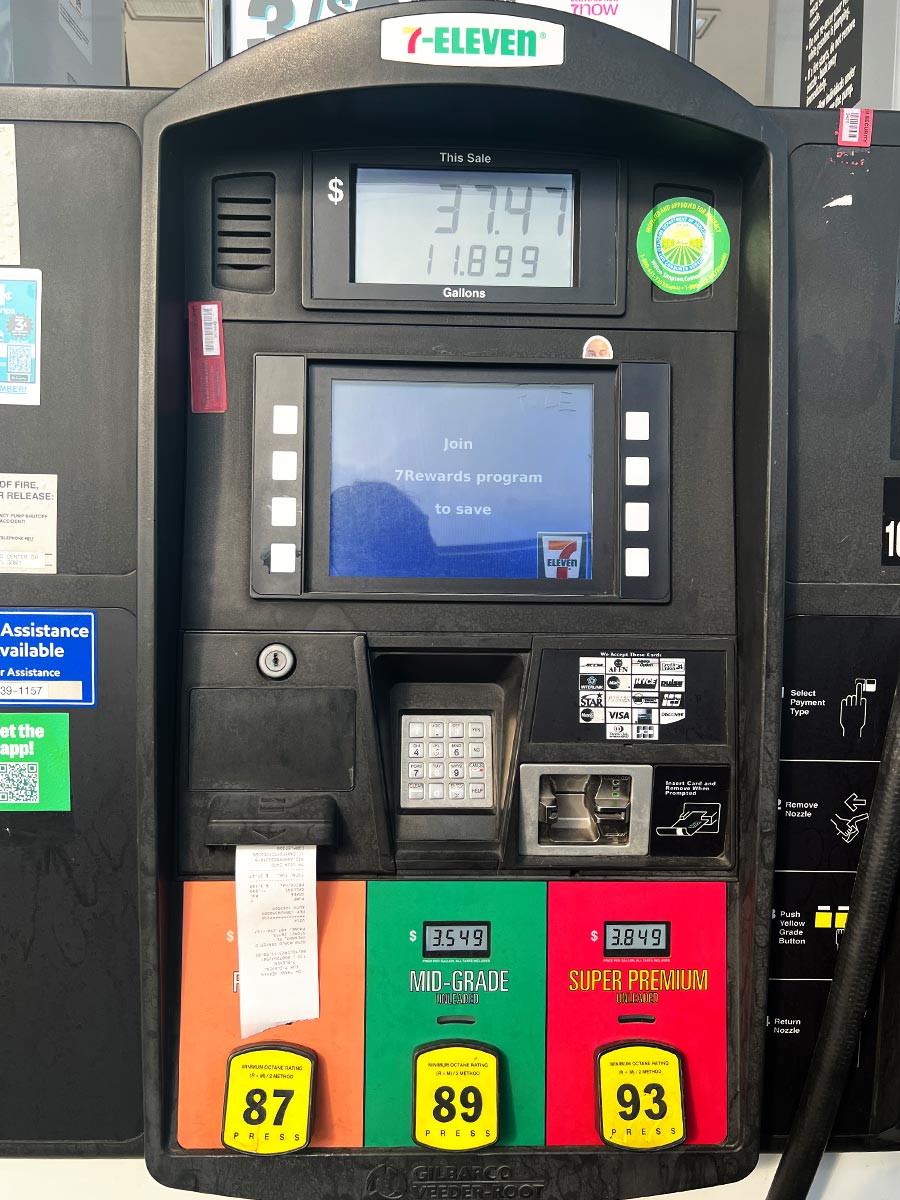
- Gallons, not litres. Fuel is sold in US gallons. One US gallon is about 3.78 litres, which is smaller than a UK gallon. The price per gallon looks cheap at first glance, until you do the conversion.
- You can usually pay at the pump with a card. But UK cards sometimes get rejected because the pump asks for a US ZIP code. If that happens, go into the kiosk, hand over your card, and tell the cashier how much you want on the pump. They’ll authorise it, and any unused amount goes back on the card.
- Pick the cheaper stations. 7-Eleven, Wawa, and RaceTrac tend to be the cheapest near tourist areas. The stations closest to the airport and the theme parks are always the most expensive.
- Fuel grades are different. You’ll see Regular (87), Mid-Grade (89), and Premium (91 or 93). Rental cars take Regular unless the paperwork specifically says otherwise. Don’t let an attendant upsell you to Premium.
- Fill up before you return the car. The station at the airport is expensive, and rental companies charge an expensive fee if you return the car less than full. Fill up at a cheap station about 10 minutes from MCO, keep the receipt, and photograph the fuel gauge before you hand the keys back. Be sure to factor in both the fill-up and the rental drop-off queue to work out when you need to arrive at MCO.
Orlando’s Toll Roads Are Everywhere
Orlando and the surrounding areas have a lot of toll roads. I-4 is free. However, many other major tourist routes are tolls including the 528 (Beachline), the 417, the 429, the 408, and Florida’s Turnpike.

Almost all tolls are now cashless with no booth and instead are done automatically using the number plate gantry scanner. In this case there are four options:
- Set your sat nav to avoid toll roads: If you don’t want to pay any tolls at all then this is the best option but it could add a significant amount of time onto your car journeys which may not be ideal.
- Let the rental company pay the toll: Since the car isn’t registered to you the bill will go to the rental company who will pay the toll and then pass it onto you with an admin fee on top. I’d advise against this.
- Buy a toll pass from the rental company: You’ll often be upsold a toll pass when picking up your rental car with scaremongering tactics from option two. Again, I’d avoid this.
- Get the Visitor Toll Pass: This is the option the rental companies don’t tell you about and don’t offer. It’s run by the Central Florida Expressway Authority, and it’s only available if you’re picking up and returning your rental car at MCO. You reserve a free hangtag through their app before you fly, collect it at the airport, and it pays your tolls electronically at the lowest rate with no admin fees. You pay a $10 deposit that goes towards your actual tolls.
I’ve used Visitor Toll Pass and saved a small fortune. The catch is that rental counter staff will try hard to upsell you to their own toll pass instead, where they make much more money. Stand your ground and politely decline their pass.

If Visitor Toll Pass isn’t an option (picking up from Sanford, for example) then your best option is to accept the rental company’s toll program and budget for the extra daily fee.
I-4 Is Still Under Construction (Just Not Where It Used to Be)
If you’ve read older advice about driving in Orlando, you’ll have seen warnings about the I-4 roadworks. The good news is the biggest project, I-4 Ultimate, is finished. That was the 21-mile rebuild through downtown Orlando (Kirkman Road to SR-434) with the new express lanes. It’s a much better drive now than it was five years ago.
The less good news is construction has moved south. A much larger project called Moving I-4 Forward is active on the stretch of I-4 most tourists drive between MCO and the Disney resorts. Expect lane closures and slower journeys at peak times. The full program is scheduled to run until 2031, so this is going to be a thing for a while.
Two new congestion relief lanes opened in April 2025 as an early part of the project, which has already taken some of the edge off. But if you want to avoid I-4 entirely for a Disney trip, the 429 (Western Beltway) is a toll road alternative that many locals prefer for the more relaxed drive.
A New Car Is Better Than an Old Car
When I first hired a car in the US, I wanted a banger. That way, if I damaged the car, maybe nobody would notice. I didn’t damage the car, but I did realise that was a terrible idea.
Modern US rental cars come with features that make driving a lot easier, especially for someone getting used to being on the wrong side of the road:
- Parking cameras
- Parking sensors
- Built-in sat-navs (or Apple CarPlay / Android Auto)
- Lane assist
When I ended up renting a near-truck, the parking sensors were the only reason I got into any parking space at all. Having access to Apple CarPlay also makes the journeys easier and more enjoyable.
Take Photos of the Rental Car Before & After
Rental car companies make money on damage claims. Some of those claims are legitimate. Some aren’t. Either way, you want evidence of the state of the car when you collected it and when you handed it back. Before you drive off the rental lot:
- Photograph every side of the car
- Photograph any existing scratches, dents, or scuffs up close
- Photograph the wheels and tyres
- Photograph the interior, including the dashboard, seats, and boot
- Photograph the fuel gauge and odometer
Do this on your phone rather than a rental camera. Phones stamp the photo with date, time, and location metadata, which is the kind of evidence that can help you in case of a dispute. Do the same again when you return the car, before you hand the keys over.
I had a dispute with Budget at MCO over a fuel refill I’d actually done. The receipt from the 7-Eleven across the road plus a timestamped photo of the full fuel gauge got the charge reversed. Without either, it would have been my word against theirs and I’d have likely lost.


Frequently Asked Questions
Is it hard to drive in Orlando for the first time?
No, Orlando is one of the easiest US cities to drive in for UK visitors. The roads are wide, the signs are clear, and the traffic keeps you on track. The first five minutes are the hardest, but after that it feels natural.
Can a UK citizen drive in Florida?
Yes. A standard UK photocard driving licence is all you need to hire and drive a car in Florida. You don’t need an International Driving Permit.
Do I need an International Driving Permit for Florida?
No. Florida doesn’t require an IDP. Every major rental company accepts a UK photocard licence on its own.
Is it easy for a Brit to drive in America?
In Orlando, yes. Driving on the right feels odd at first but the traffic flow and road signs make it hard to get wrong. Rental cars are automatic, the roads are wide, and the parking spaces are huge.
How old do you need to be to rent a car in Orlando?
You need to be at least 21. Drivers under 25 usually pay a ‘young driver fee’ of around $20 to $30 a day on top of the rental price.
What side of the road do they drive on in Orlando?
The right-hand side, like the rest of the United States.

Let’s Chat!
Thanks for stopping by! Do you have experience with this trip or want to share some of your own tips? We’d love to hear about it! Comment below and let’s chat!